
Overview
Lenzly is a desktop app for photographers who manage their work manually — WhatsApp for bookings, Google Drive for delivery, a notes app for clients.
It replaces that. Services, bookings, galleries, and delivery in one place. Lives in the taskbar, opens with a hotkey.
The Problem
Photographers book over WhatsApp, deliver through Drive, and track clients in their heads. It works until it doesn't — a client can't find their photos, a booking falls through, a price gets quoted differently every time.
Lenzly fixes that.
Services and packages
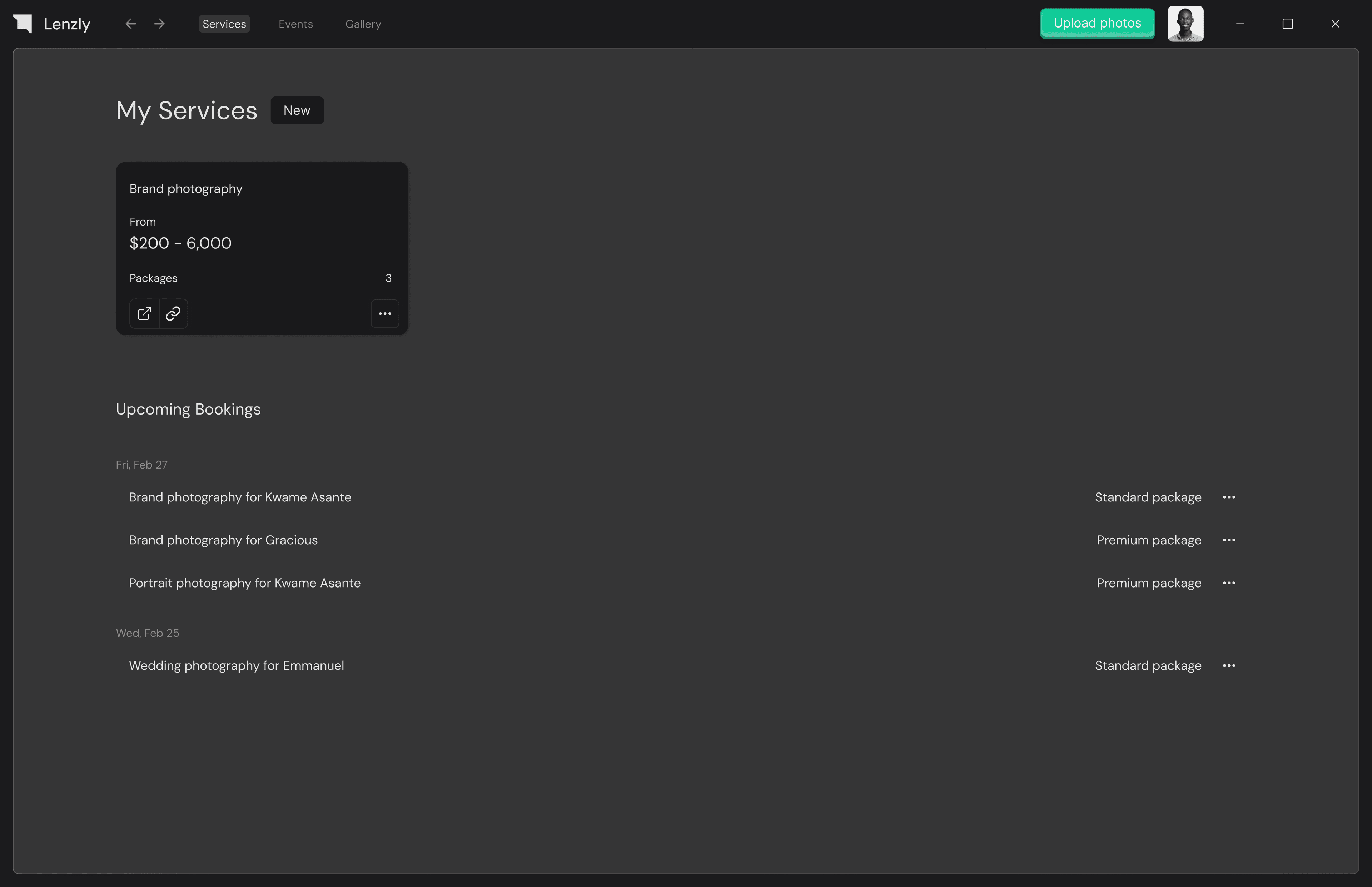
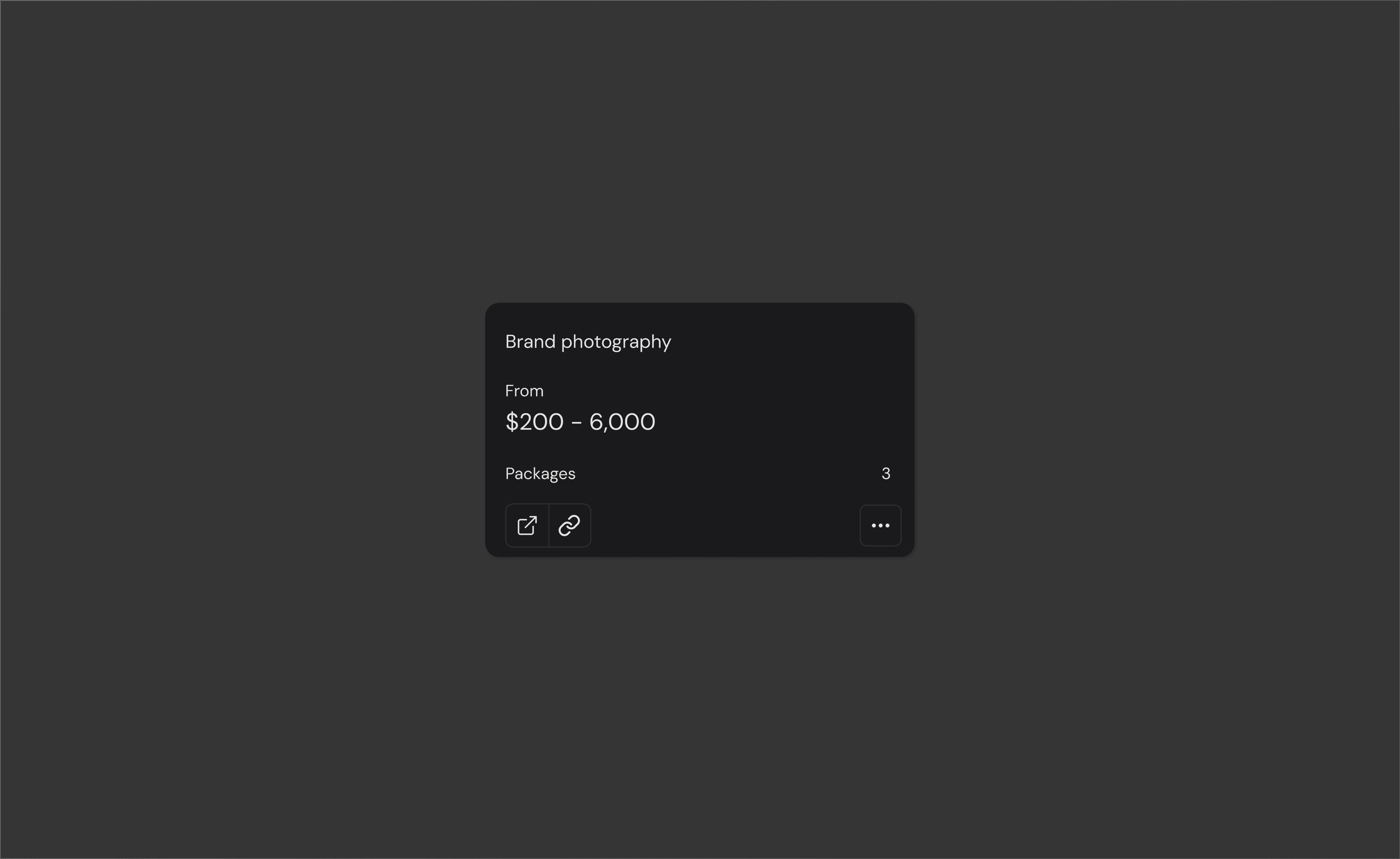
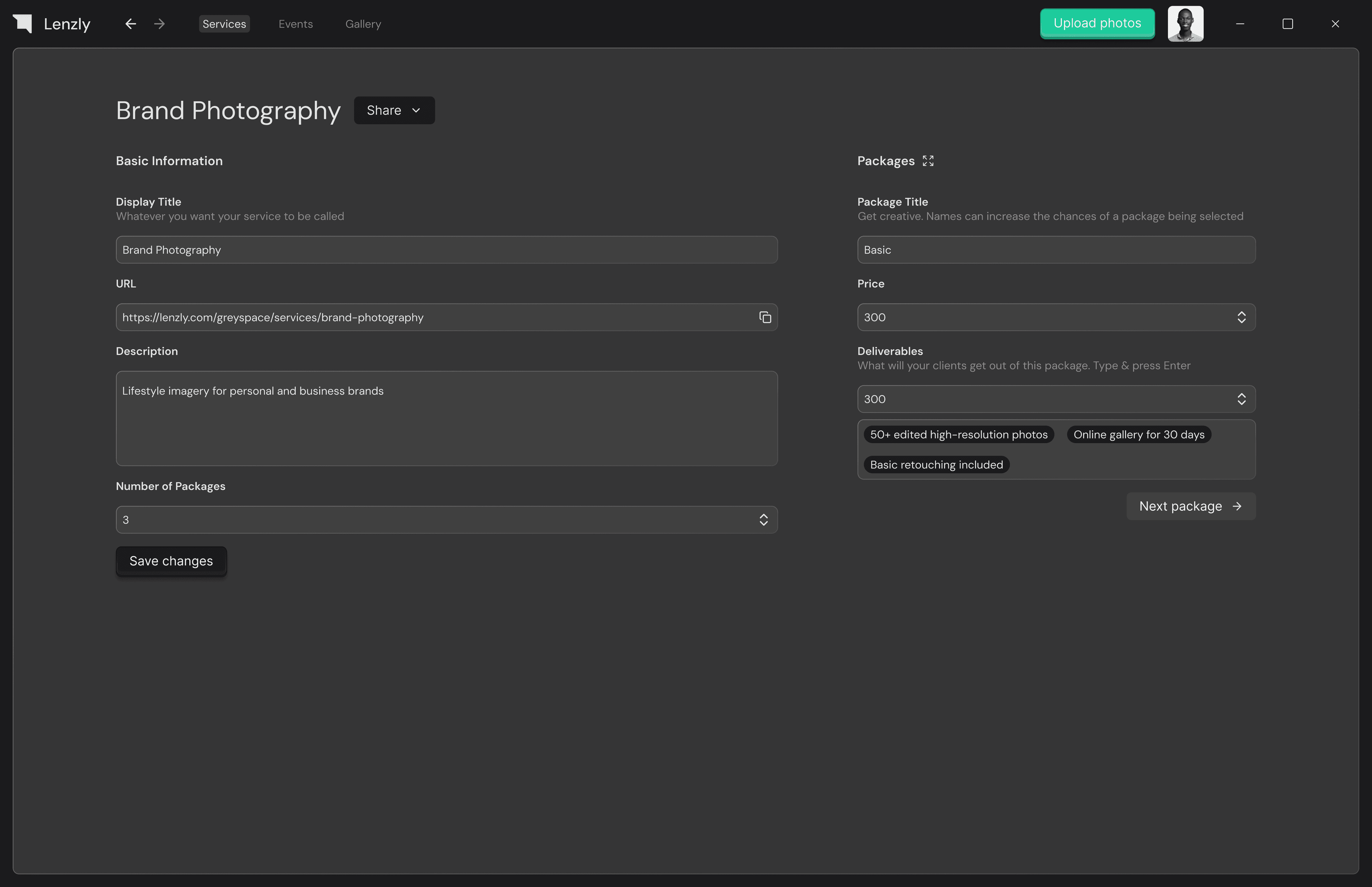
A photographer creates a service once — brand, portrait, wedding — with pricing and packages. Each gets a shareable URL clients can book from directly. No re-explaining every time someone asks what you offer.
Events and bookings
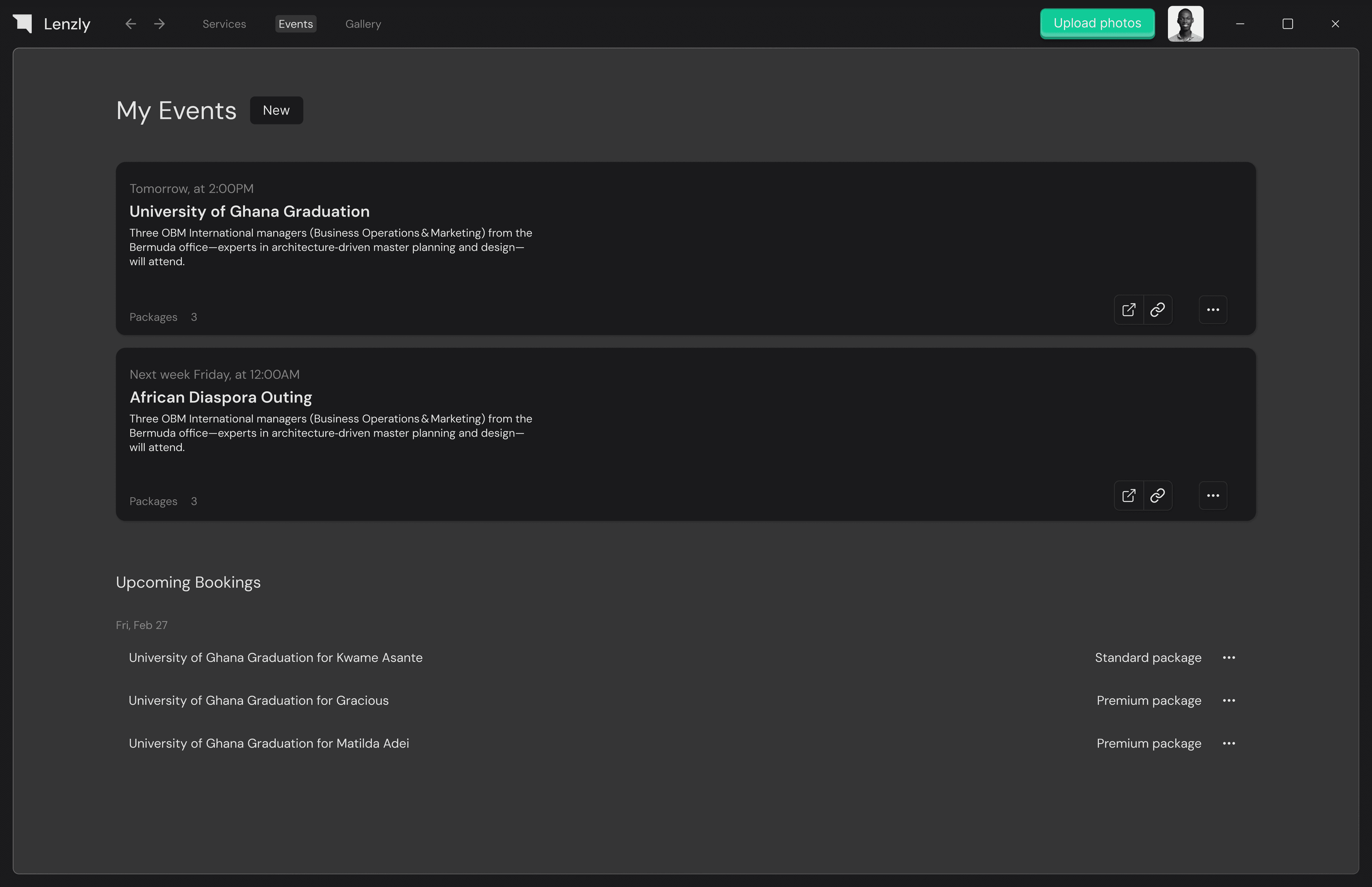
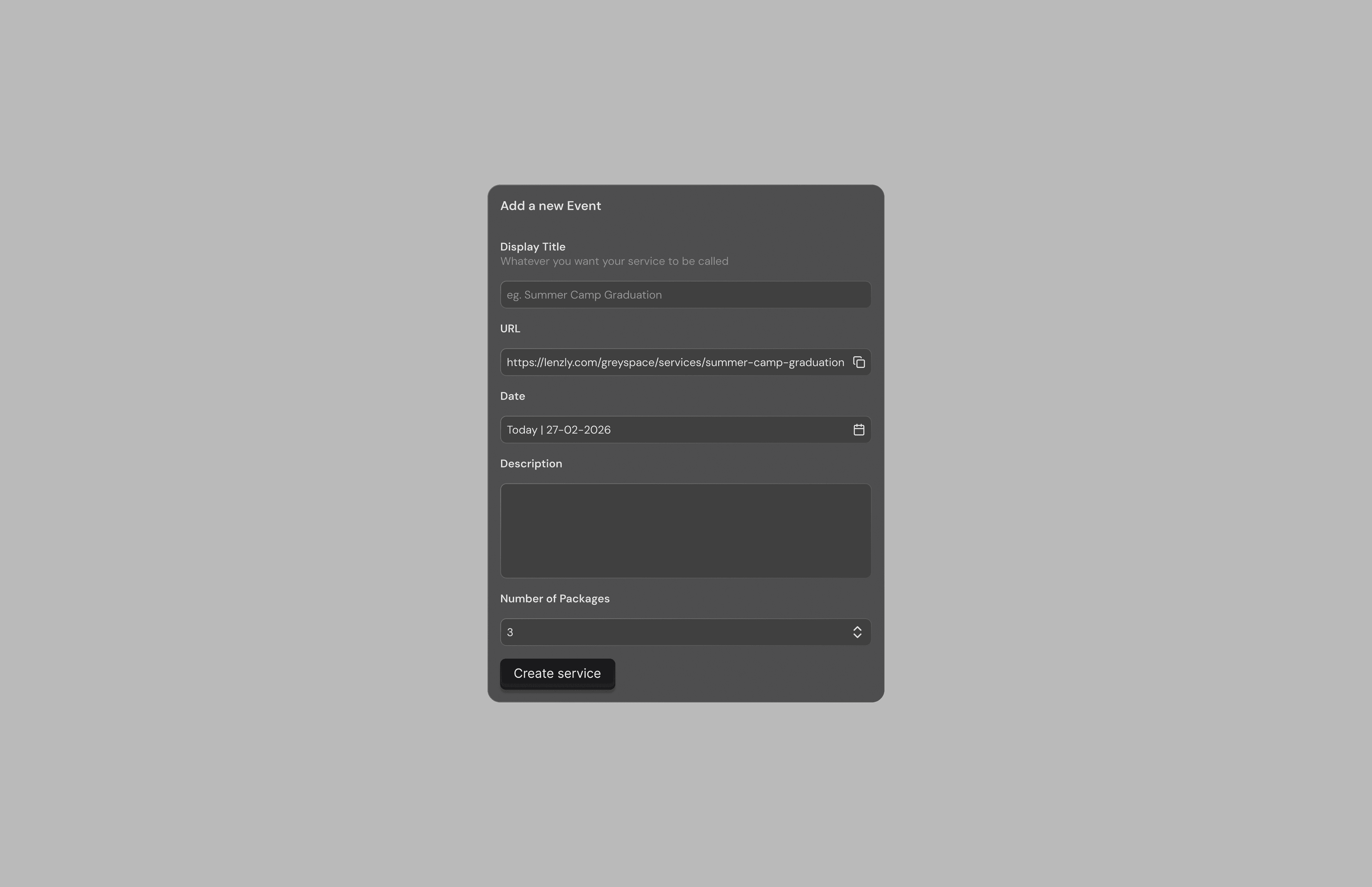
Bookings live inside events. Every upcoming shoot across all events surfaces on the dashboard — client name, shoot type, package, date. The week at a glance, no separate calendar needed.
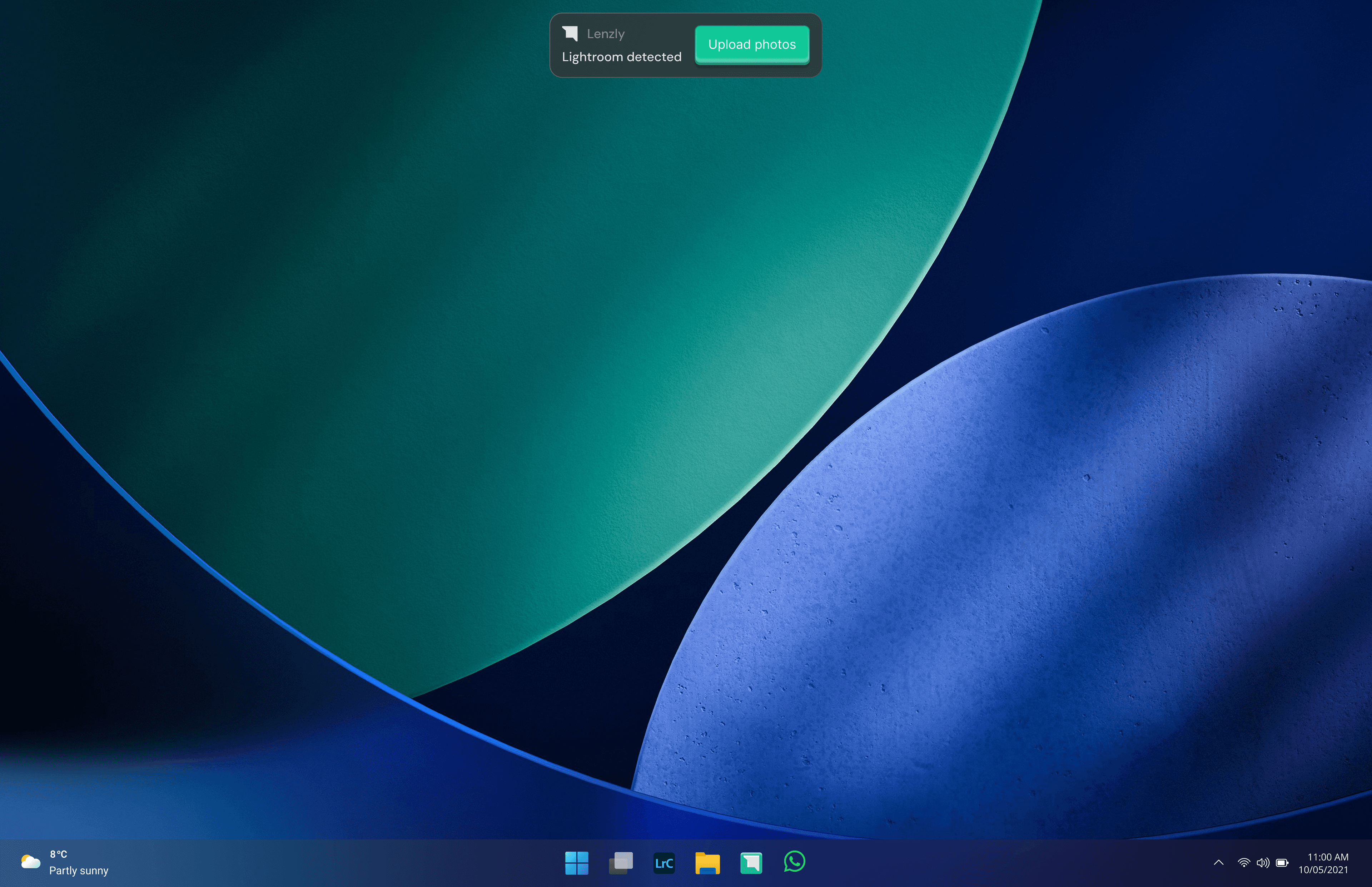
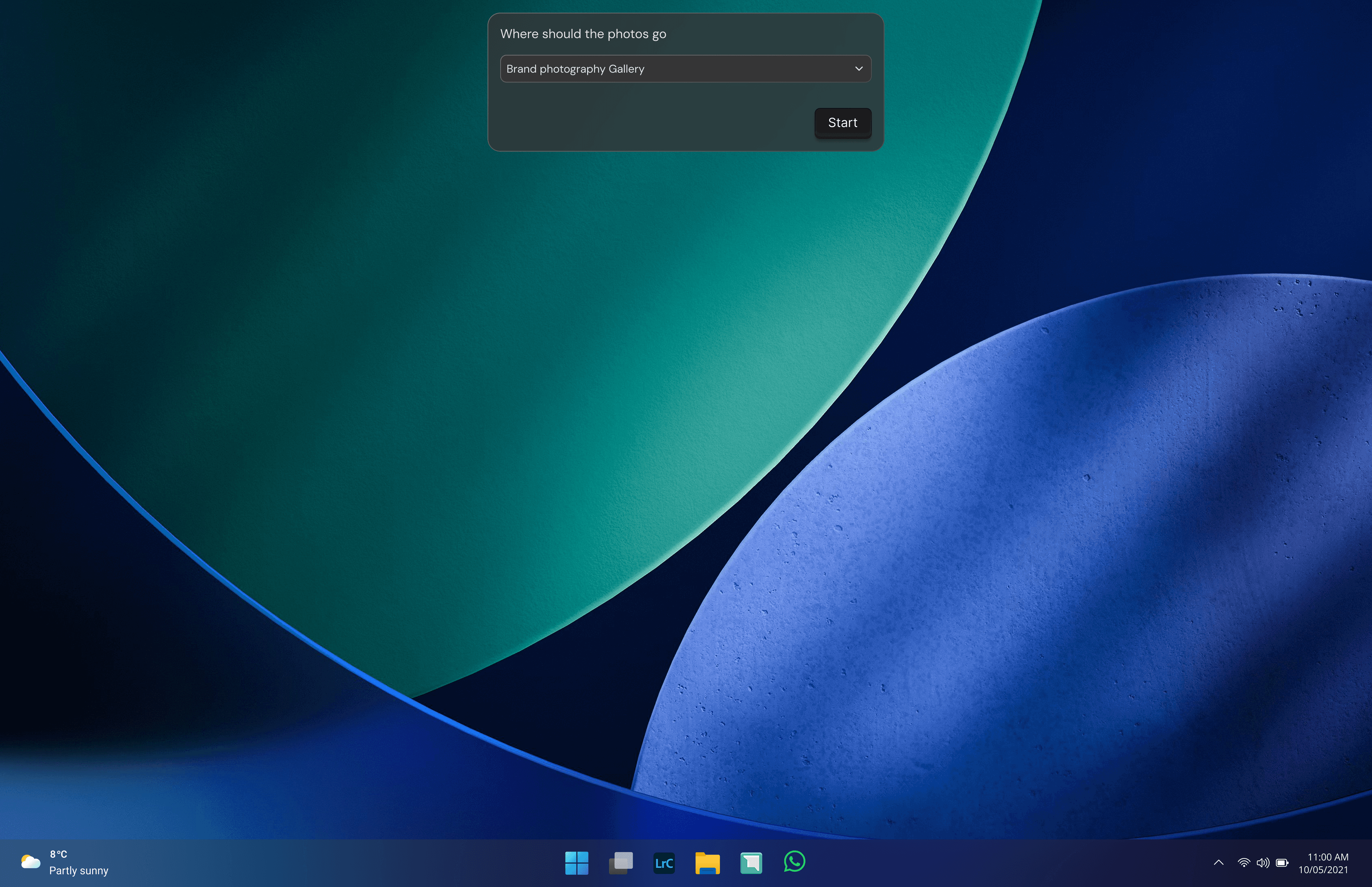
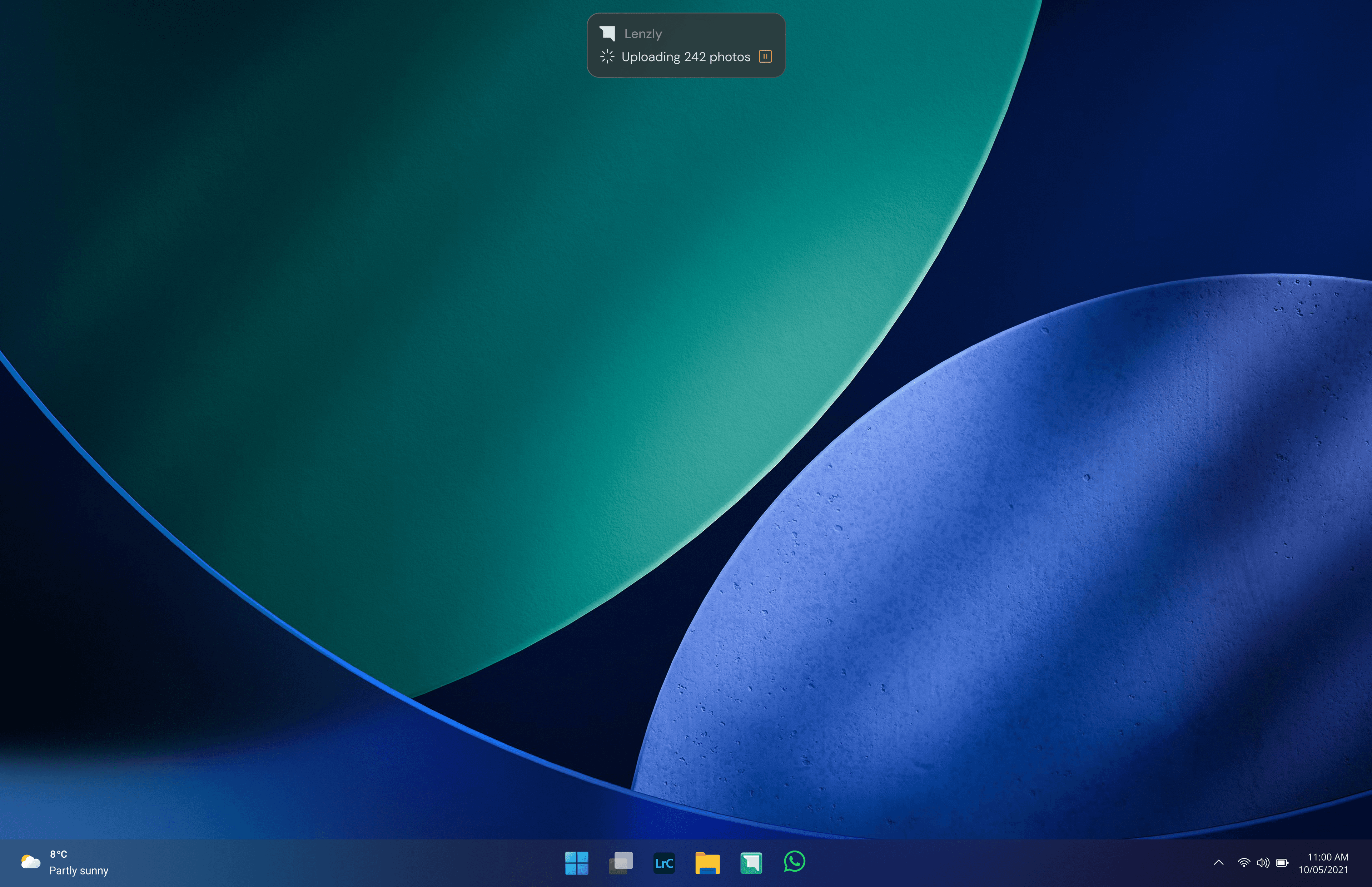
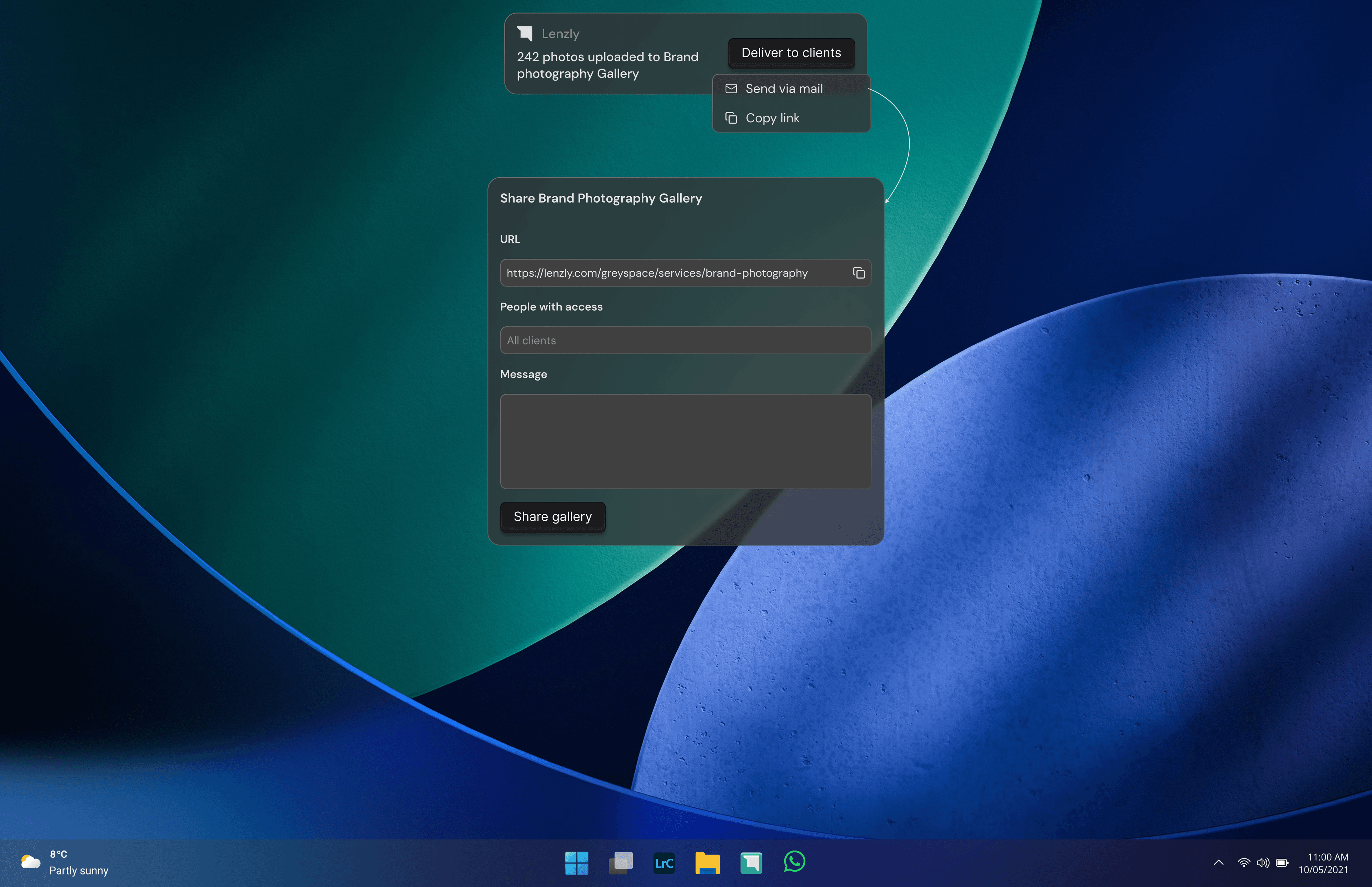
Upload from Lightroom. Deliver without opening the app.
Lenzly detects when Lightroom is open and surfaces a prompt. The photographer picks a gallery, starts the upload, and keeps working. When it's done, one click sends the client a gallery link. No login required on their end. None of the six steps require opening Lenzly.
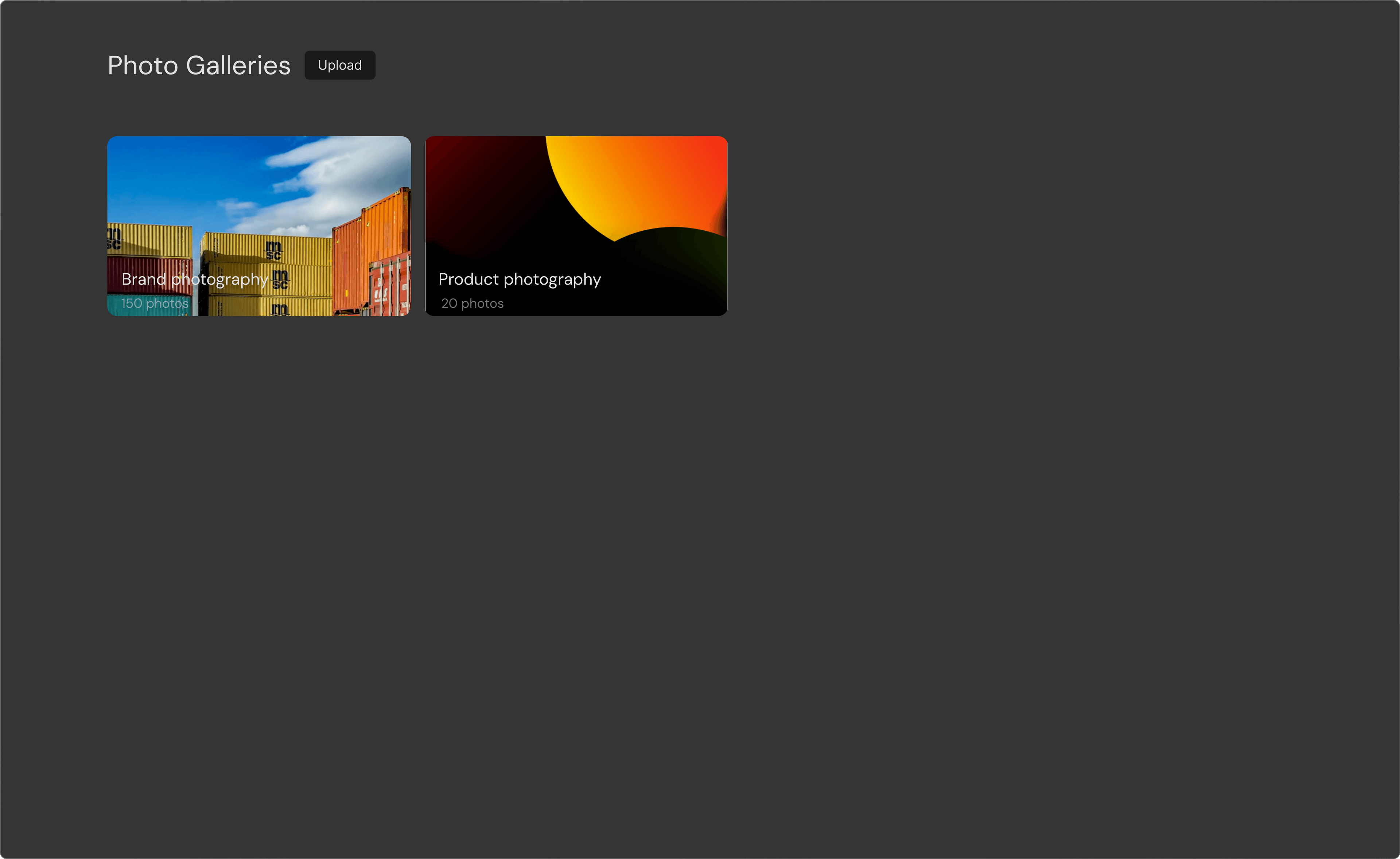
Photos, organised by event
Photos land in the event gallery after upload — labelled automatically, arranged in a masonry grid. Browse by event or service type. Every shoot has a home.
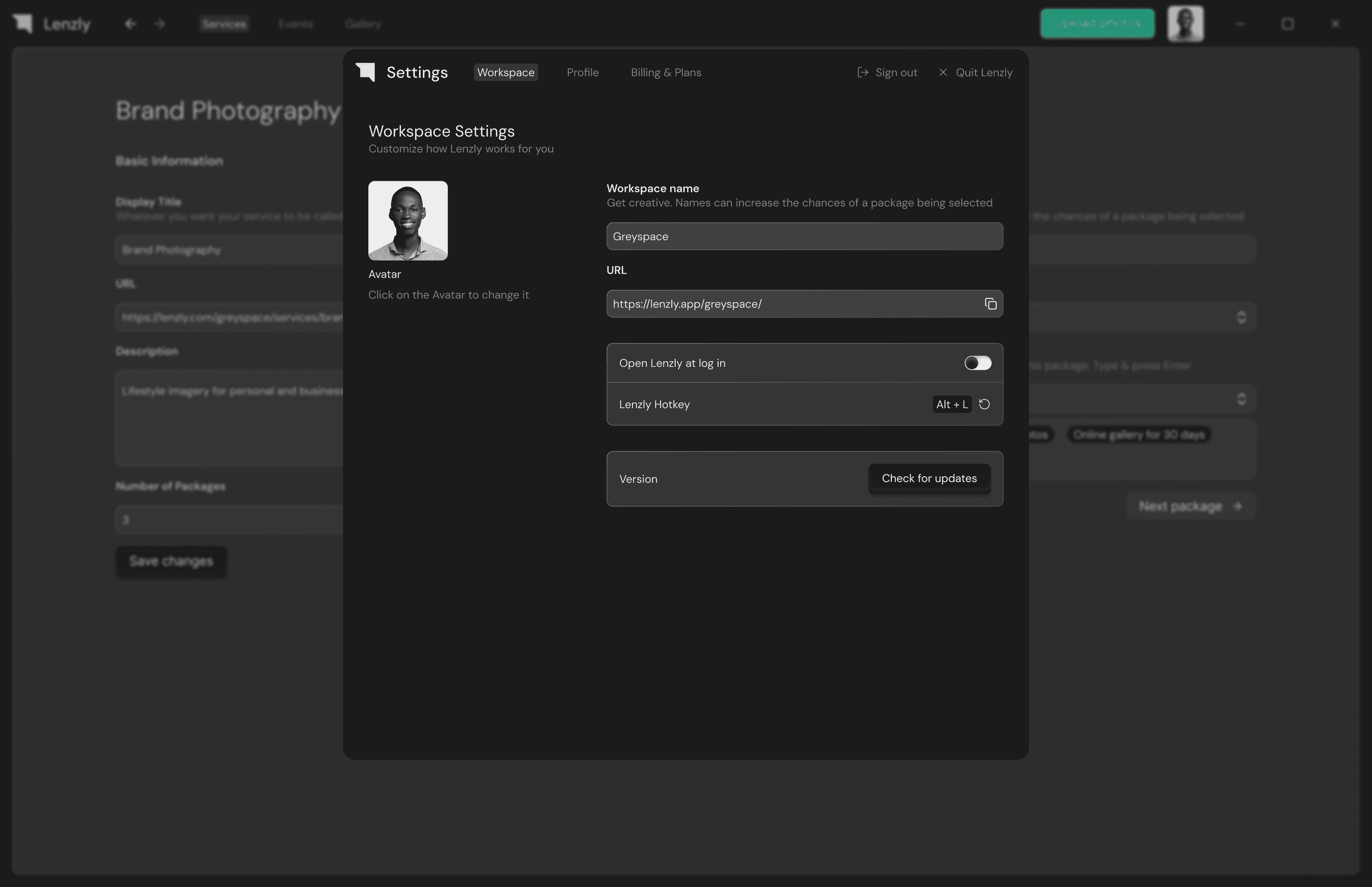
A workspace that fits your workflow
Lenzly sits in the taskbar and opens with Alt+L. The photographer names their workspace, gets a public URL, and sets it to open at login. Minimal settings for a minimal app.
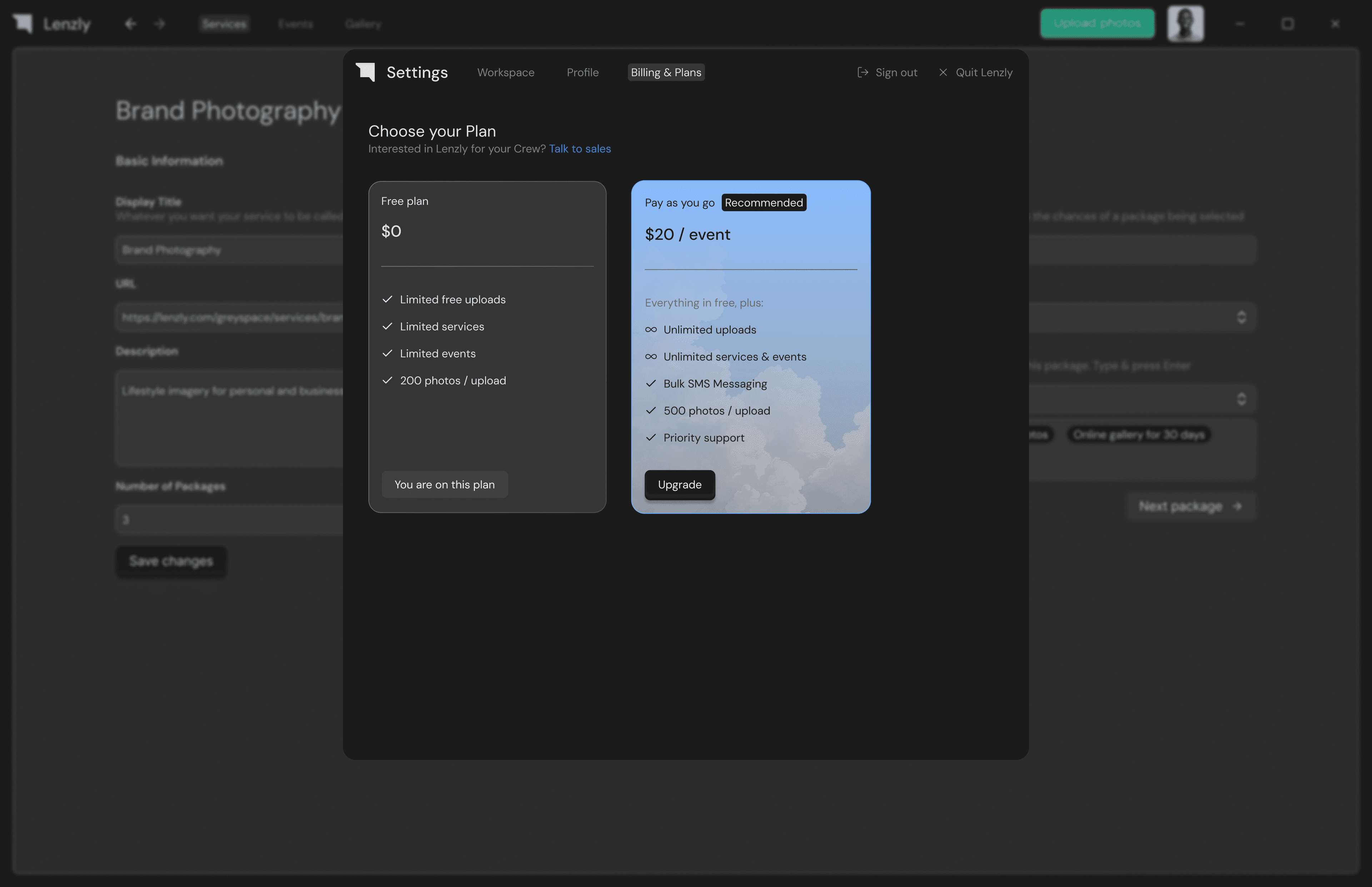
Pay for what you use
Free plan covers limited uploads — enough to try the product. Pay-as-you-go is $20 per event: unlimited uploads, bulk SMS, priority support. No subscription. A slow month costs nothing.
Conclusion
Lenzly is built for a photographer who is good at their craft and bad at the admin around it. The design problem wasn't how to build a photography platform — it was how to build one they'd actually open every day.