
Overview
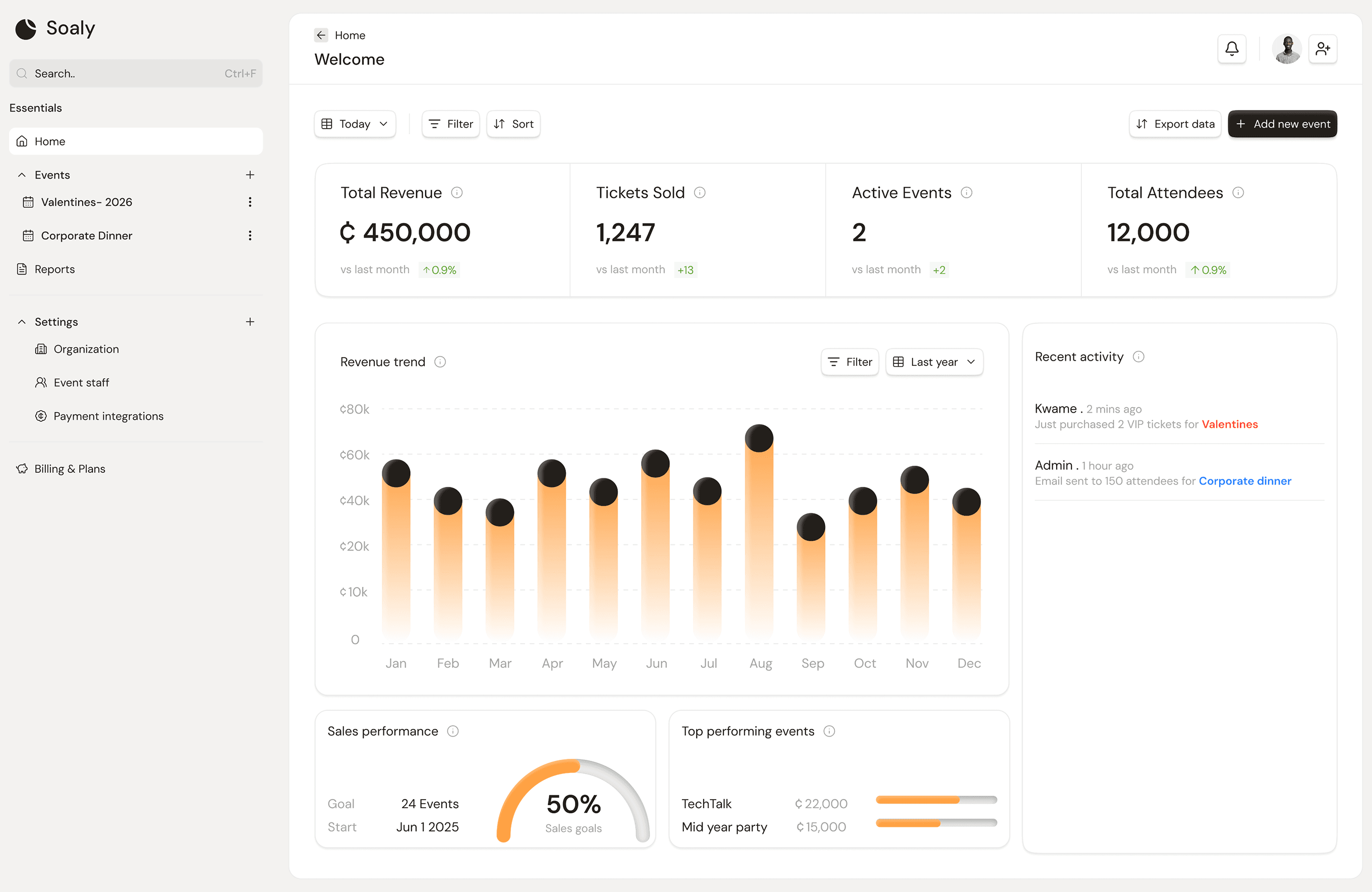
Soaly is a web platform for event organizers to sell tickets and manage attendees. Configuration is toggle-based, decisions are made upfront, and the dashboard surfaces what matters on the day — without any manual input.
The Problem
Most organizations running events in Ghana sell tickets manually, track attendance on paper, and report after the fact. Soaly replaced that — ticket sales, attendee records, check-in, and revenue reporting in one place.
Event dashboards
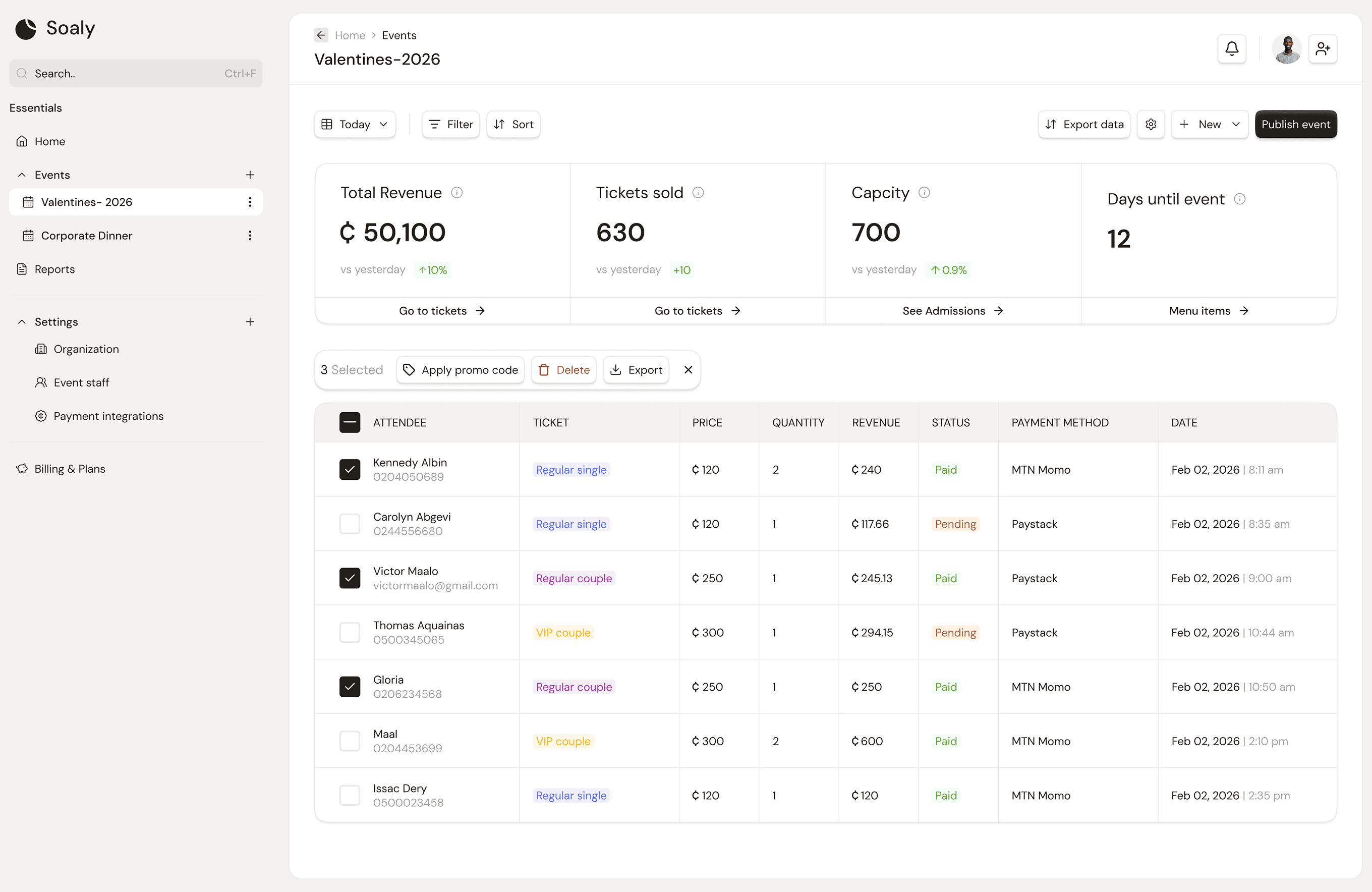
On event day, organizers have a live view of total attendees, admissions, and the running rate. The attendee table shows ticket type, status, and timestamp for every entry. At a glance, they know exactly what's happening at the door.
Toggle everything
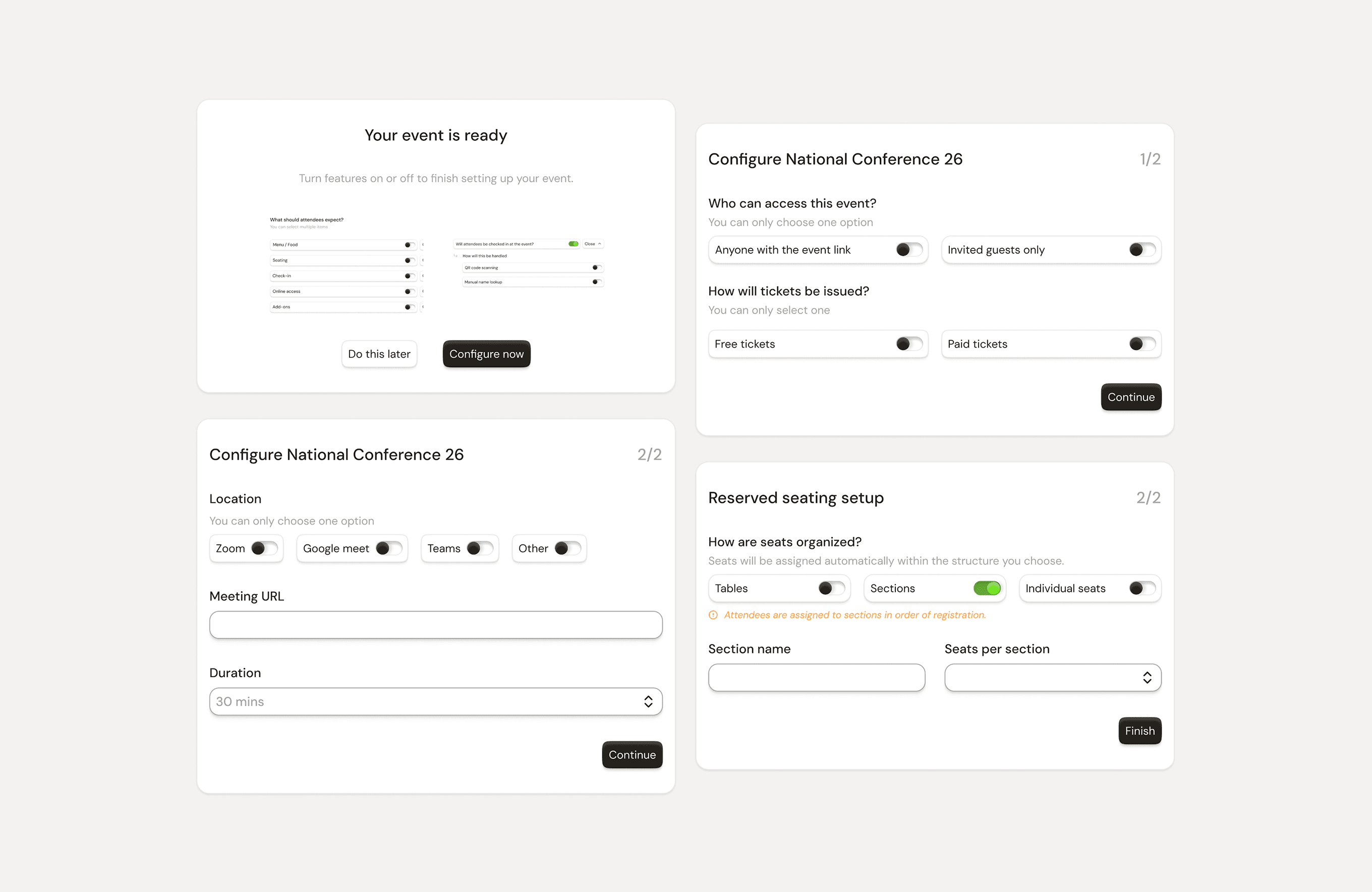
Seating type, event format, ticket pricing model — instead of forms and dropdowns, organizers flip toggles. The decision is still being made, but the friction is removed.
Customisable tickets
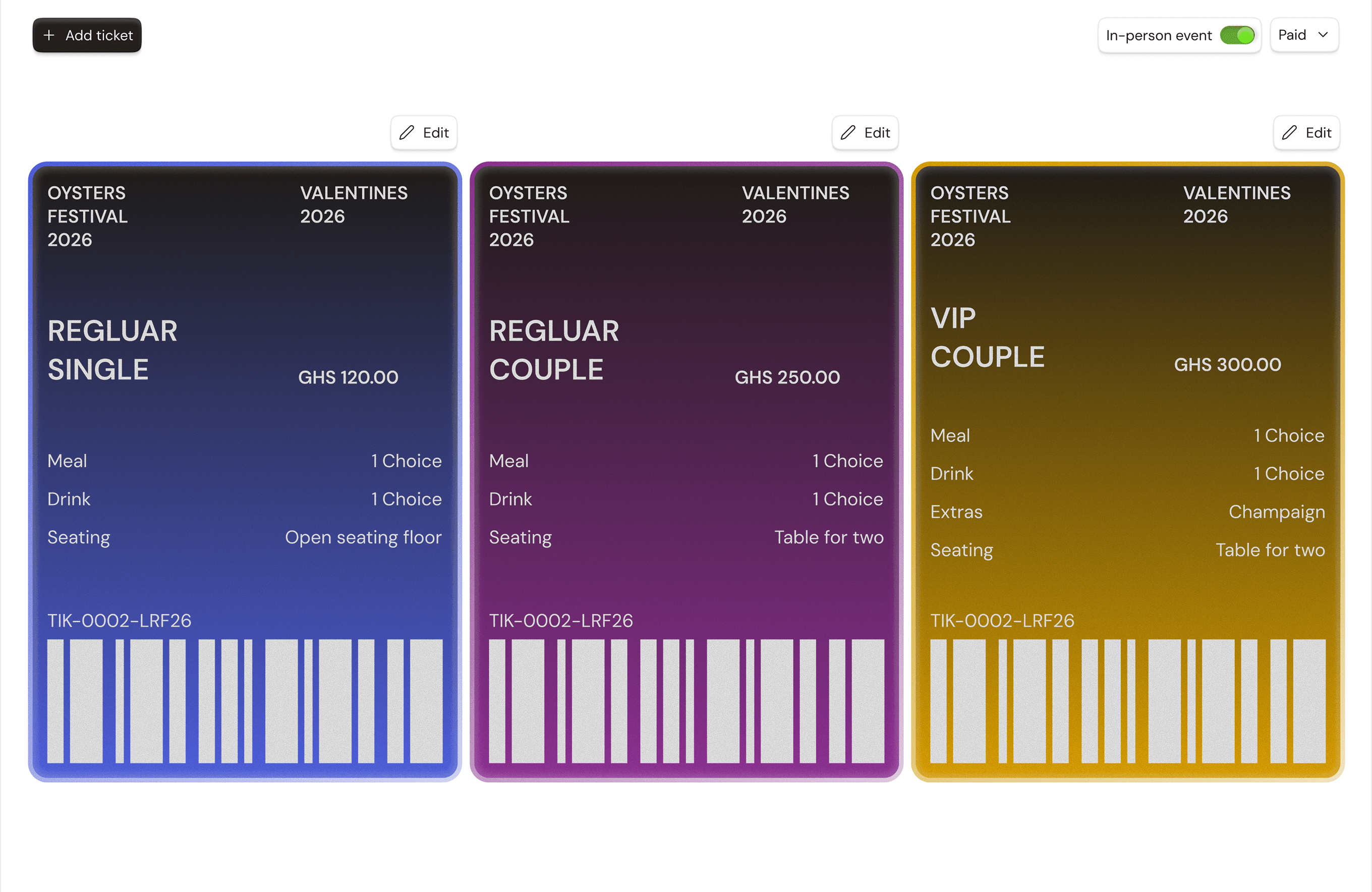
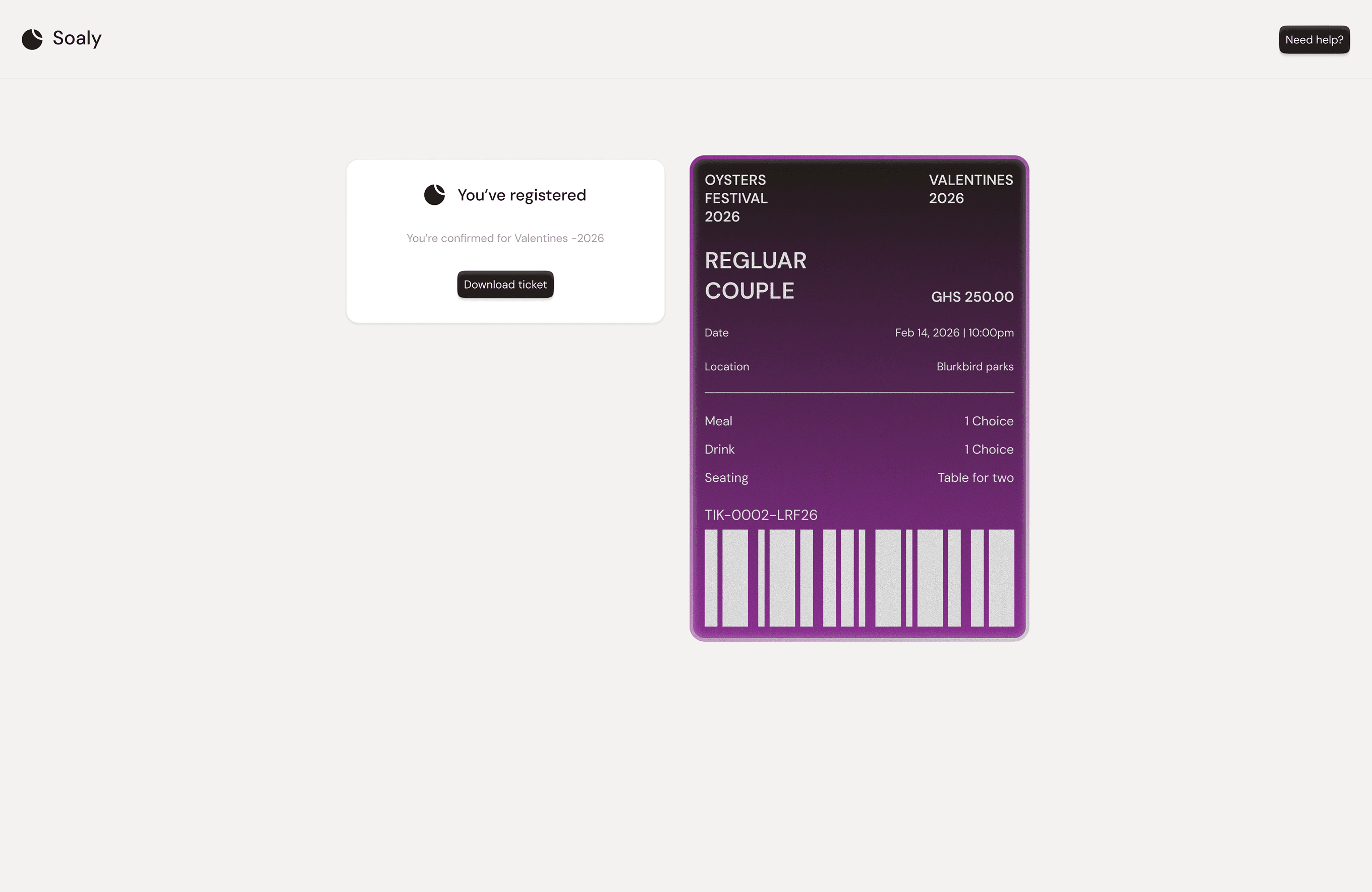
Each ticket type generates a styled, scannable card automatically — event name, tier, inclusions, price, and barcode. Organizers define the tiers; Soaly handles the output. No design work required.
Attendee booking
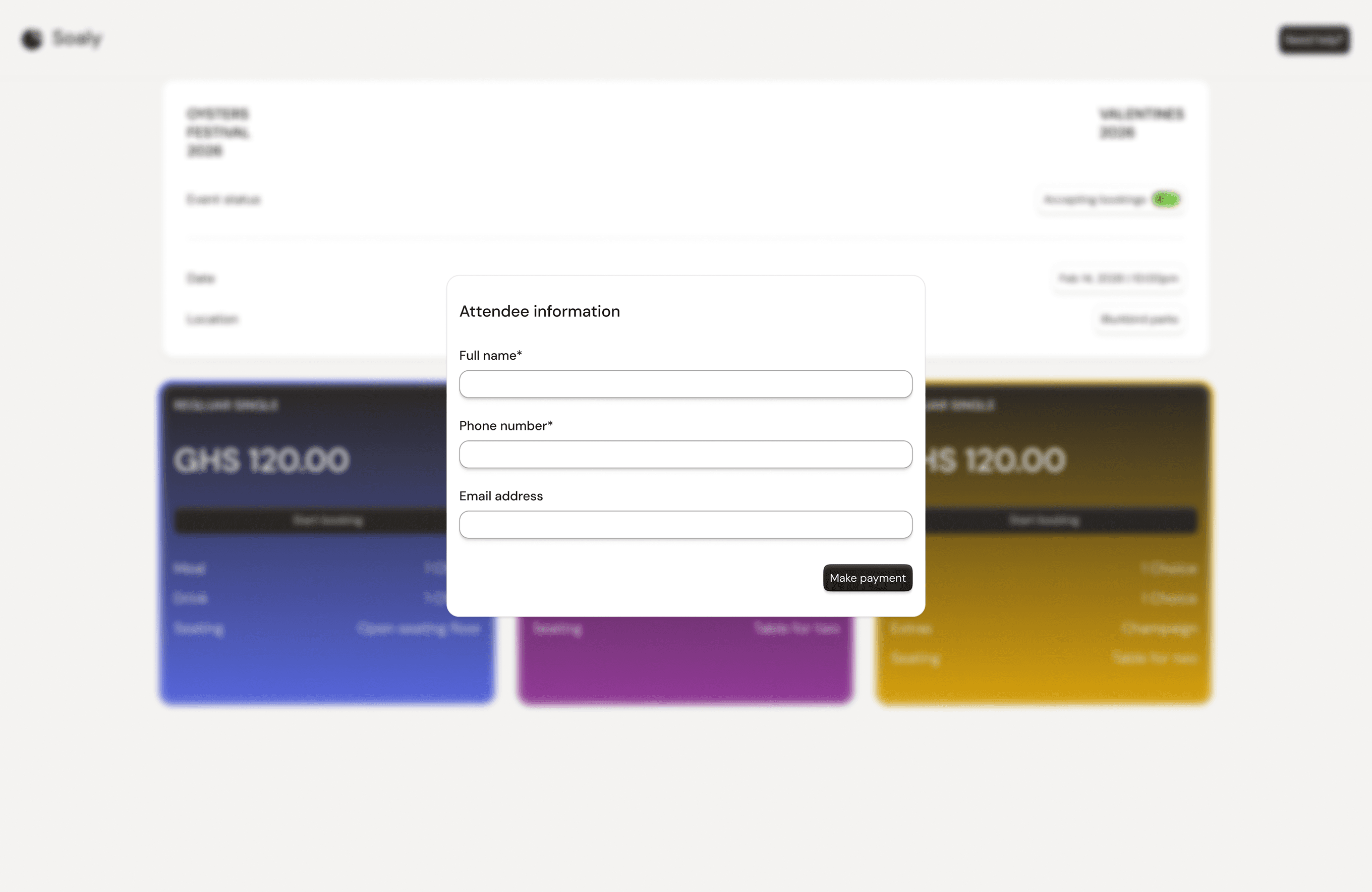
After booking, attendees get a confirmation screen and a downloadable ticket. The same card the organizer designed — receipt, confirmation, and entry pass in one.
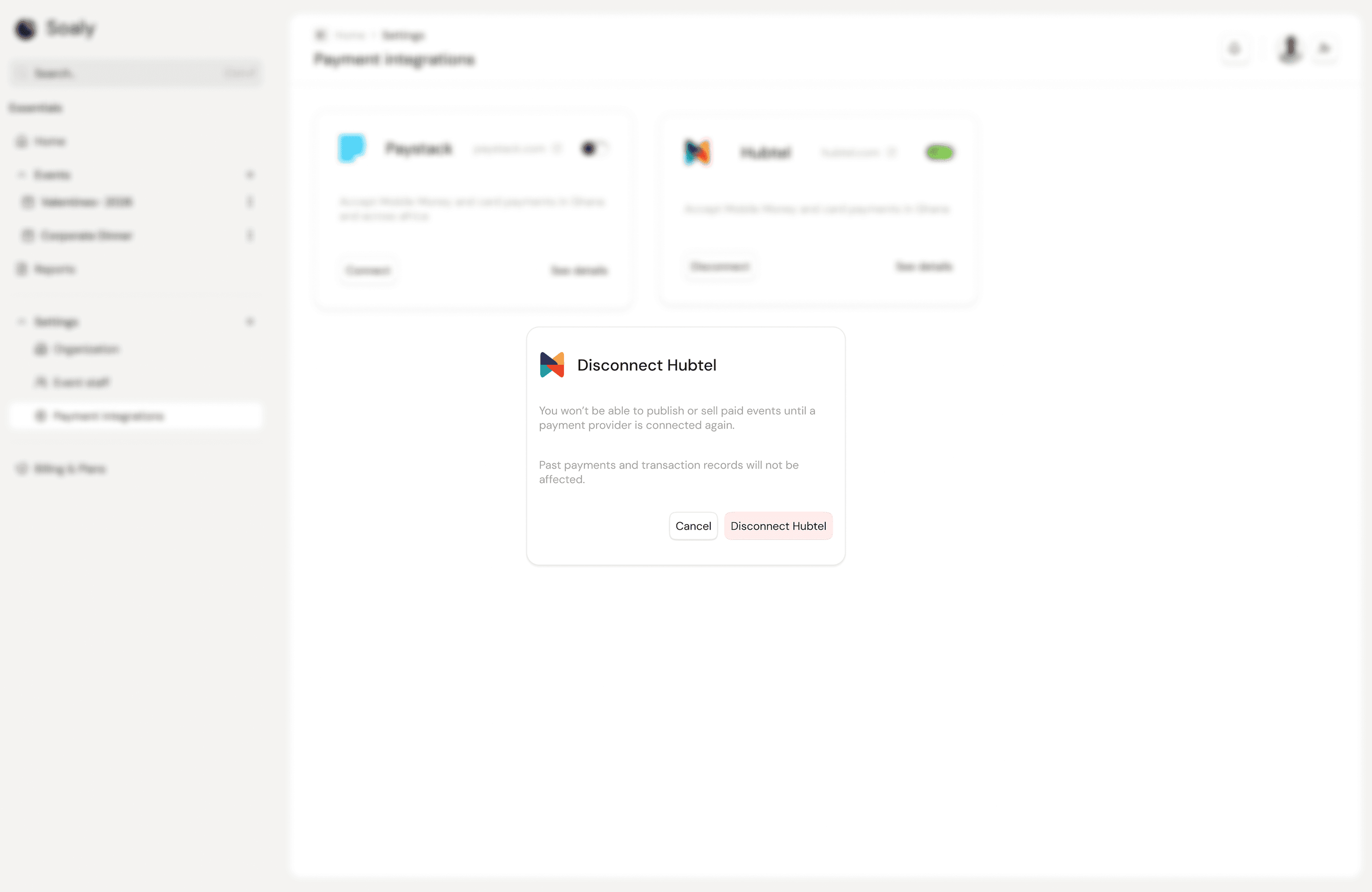
Payment integrations
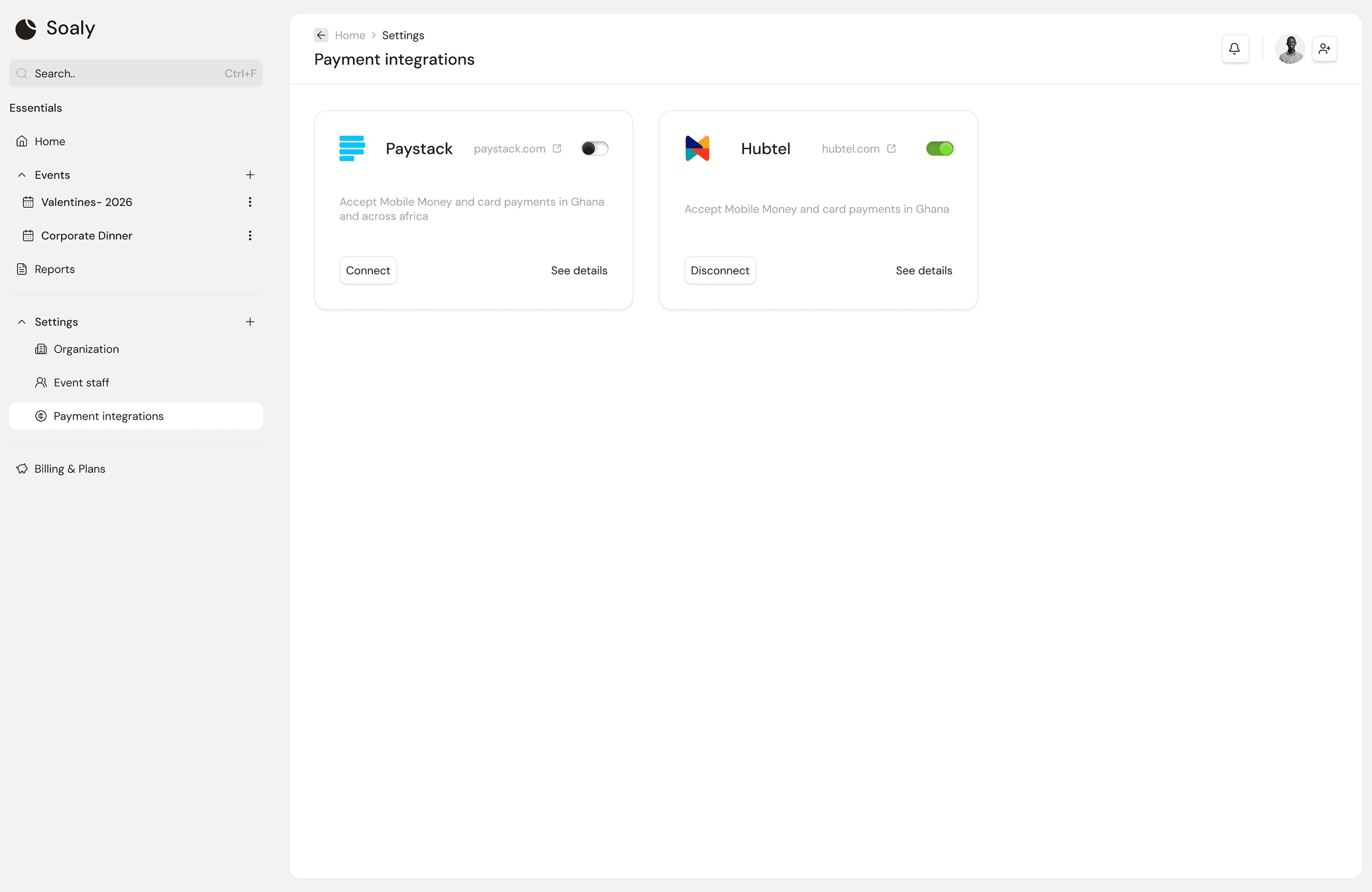
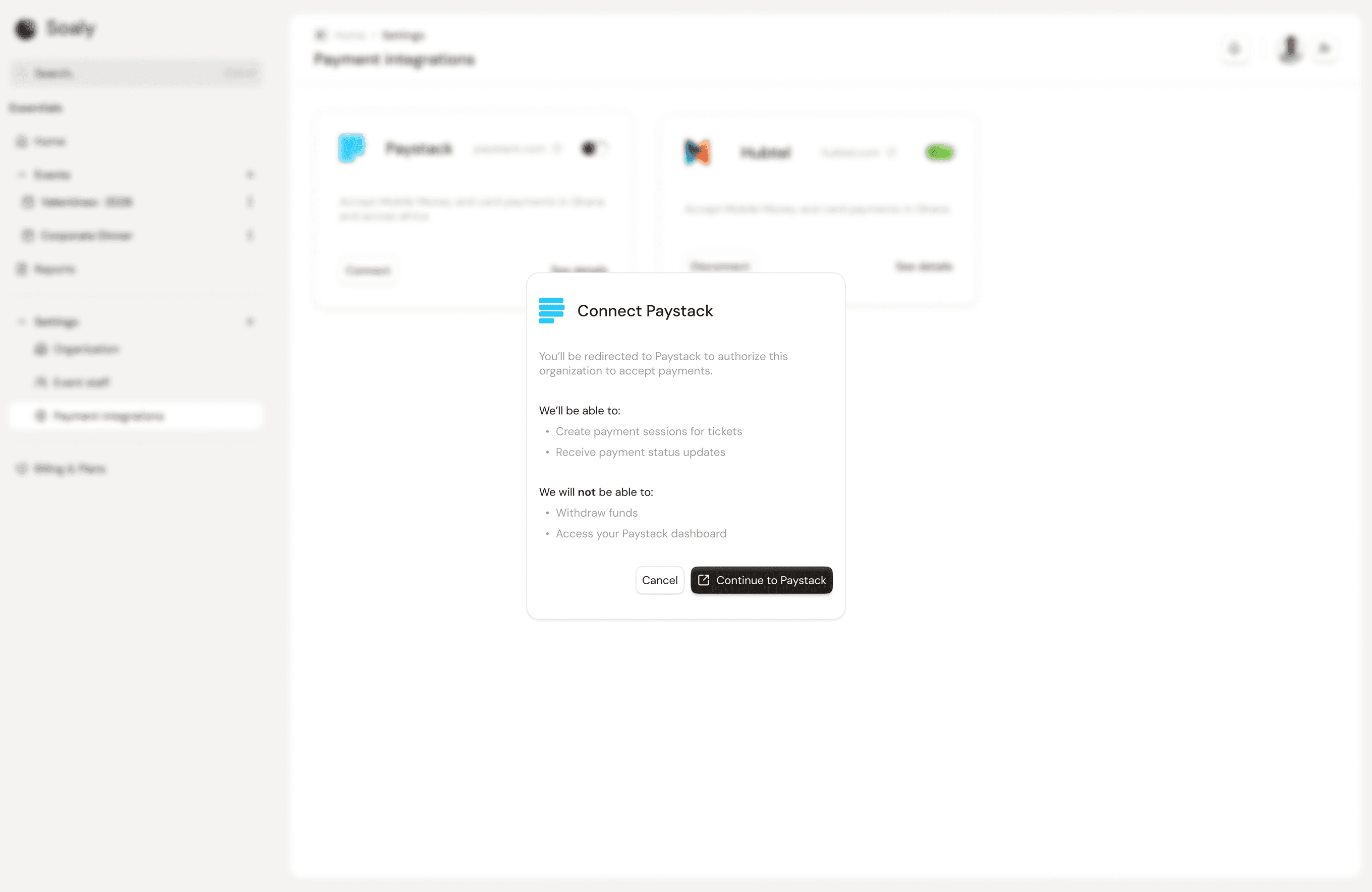
Organizers connect the payment provider they already use — Paystack, Hubtel, or otherwise. Payments flow through that existing relationship. No new payout account, no new system to trust with their money.
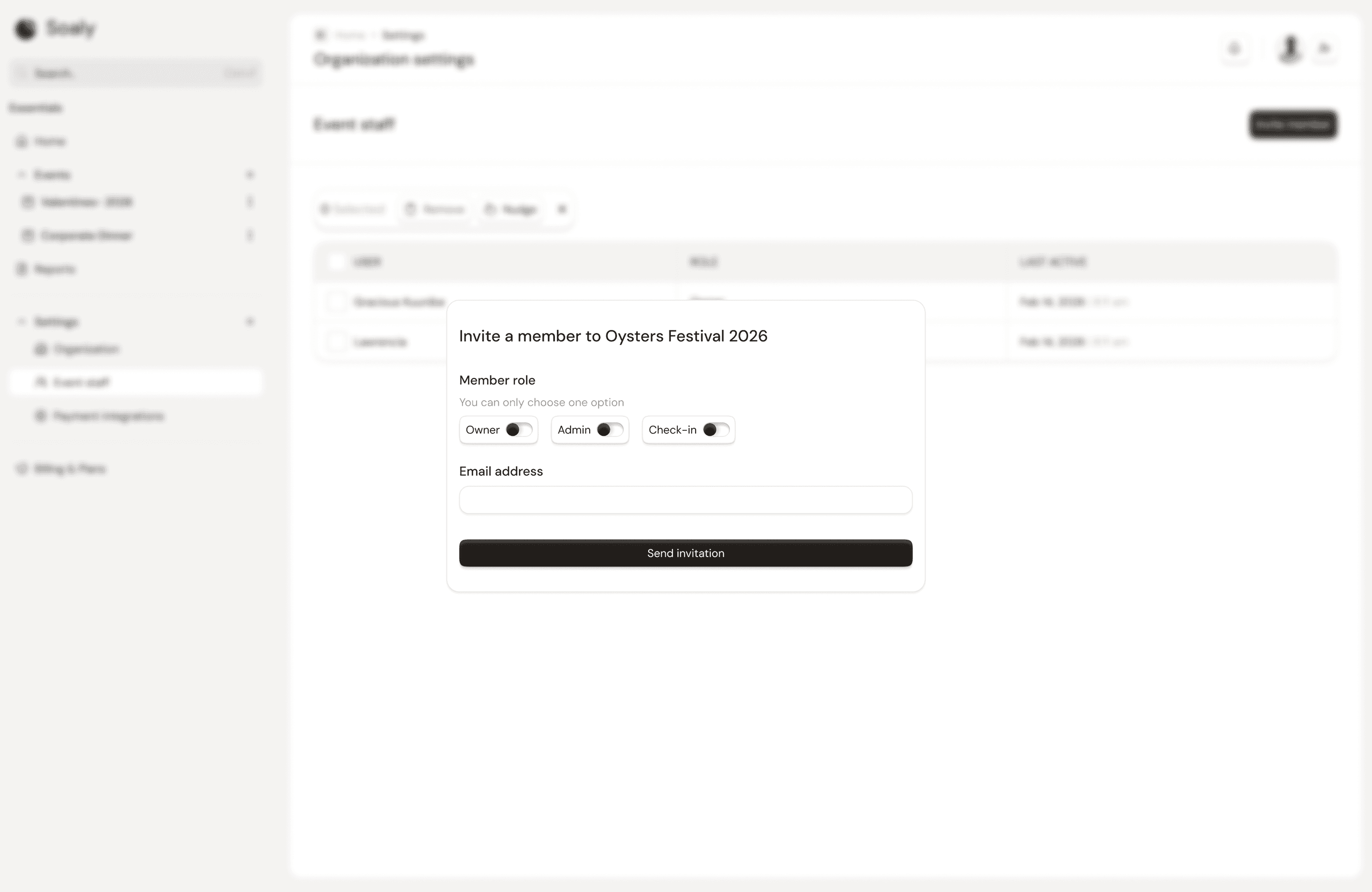
Event staff setup
Staff are invited with scoped roles — Owner, Admin, or Check-in only. The person at the door doesn't need ticket settings. Everyone gets exactly what they need and nothing they don't.
Conclusion
Soaly is built around one constraint: the organiser shouldn't have to make decisions on event day. The design problem wasn't how to build an event platform — it was how to build one that gets out of the way.